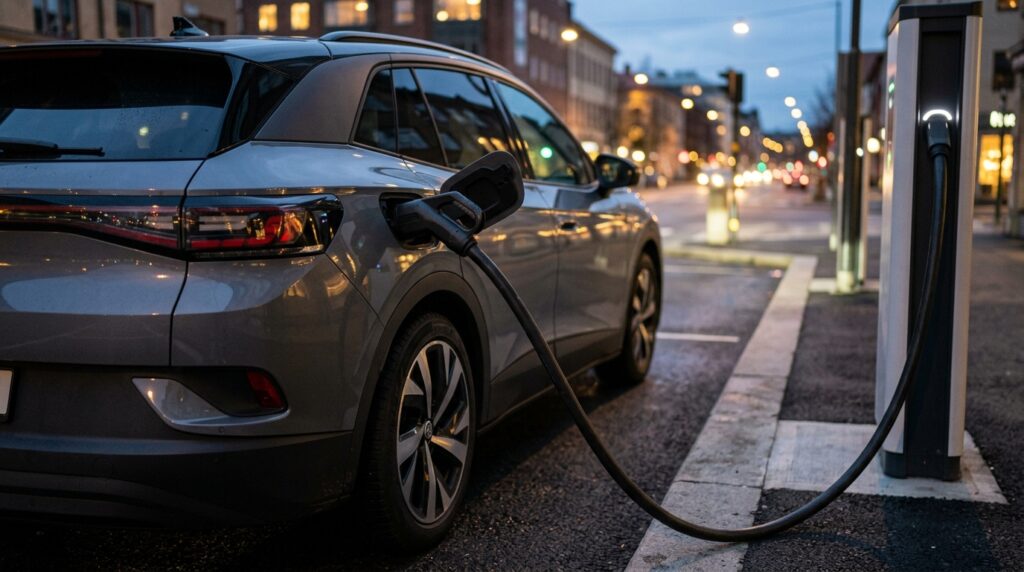
Range anxiety gets all the headlines, but battery degradation is a longer-term concern for EV owners. Will your 300-mile EV still get 300 miles in five years? What about ten? Thanks to real-world data from owners tracking their battery health, we now have solid answers — and they’re generally more reassuring than the early fears suggested.
How EV Batteries Degrade
EV batteries degrade through the same mechanisms as other lithium-ion batteries, amplified by the scale and intensity of use:
- SEI layer growth: A solid electrolyte interphase forms on the anode during initial charging and continues to slowly grow over time. It consumes lithium ions that can no longer participate in energy storage.
- Cathode degradation: The cathode material slowly loses its ability to intercalate lithium ions, reducing capacity.
- Lithium plating: Charging too fast when cold causes metallic lithium to deposit on the anode rather than intercalating properly. This permanently removes lithium from the active pool.
- Electrolyte decomposition: Heat accelerates breakdown of the electrolyte, increasing internal resistance and reducing capacity.
The net result is a gradual reduction in the battery’s ability to store and deliver energy — reduced range and, eventually, reduced performance.
Real-World Degradation Data by Brand and Model
The most comprehensive real-world EV battery data comes from Recurrent Auto (which tracks 15,000+ EVs), Geotab fleet studies, and owner communities like Tesla Motors Club and MyNissanLeaf.com.
| Model | Chemistry | Avg. degradation at 100k miles | Notes |
|---|---|---|---|
| Tesla Model 3/Y (LR) | NCA/NMC | ~8–12% capacity loss | Best-in-class retention; TMS helps significantly |
| Tesla Model S/X (older) | NCA | ~10–15% at 200k miles | Long-term data; very gradual after initial drop |
| Nissan Leaf (2011–2017) | NMC (no TMS) | 25–40% in hot climates | No active thermal management; worst degradation in the industry |
| Nissan Leaf (2018+ 40kWh) | NMC | ~15–20% | Still no active TMS; better cells but same limitation |
| Chevy Bolt (2017–2022) | NMC | ~10–15% | Passive thermal management; GM’s conservative charging limits help |
| Hyundai Ioniq 5 / Kia EV6 | NMC | ~8–10% (early data) | 800V architecture; early data looks very good |
| Ford Mustang Mach-E | NMC | ~10–12% | Active liquid TMS; similar to Tesla performance |
The Early Degradation Effect
One of the most important and misunderstood patterns in EV battery data: degradation is not linear. Most EVs lose 3–7% of capacity in the first 20,000–40,000 miles, then the rate slows dramatically. This initial drop is caused by the formation of the SEI layer and initial electrolyte conditioning — processes that are self-limiting once they stabilize.
The practical implication: if your 2-year-old EV’s range has dropped noticeably, that’s not necessarily a sign of accelerated decline. It may simply be the normal initial conditioning period, after which range loss will slow significantly.
What Causes Accelerated EV Battery Degradation?
- Hot climate without active thermal management: The Nissan Leaf’s reputation for poor battery longevity in Arizona and Texas is almost entirely explained by the lack of active battery cooling combined with extreme ambient temperatures. EVs with active liquid thermal management systems (Tesla, Hyundai, Kia, Ford) degrade at similar rates regardless of climate.
- Daily DC fast charging: DCFC (Level 3 charging) is convenient but generates more heat than AC charging. Studies suggest daily DCFC accelerates degradation by a measurable but modest amount — roughly 1–2% more capacity loss per year compared to primarily Level 2 charging. Occasional DCFC (road trips) is essentially harmless.
- Consistently charging to 100%: Keeping a lithium battery at 100% state of charge for extended periods accelerates cathode degradation. Most EV manufacturers recommend a daily charge limit of 80–90%, with 100% reserved for long trips. Tesla’s built-in charge limit setting is specifically designed to address this.
- Frequent deep discharges below 10%: Regular deep discharging stresses cells. Keeping daily use between 20–80% SoC is optimal.
EV Battery Warranties
| Manufacturer | Warranty | Capacity guarantee |
|---|---|---|
| Tesla | 8 years / 100,000–150,000 miles | 70% retention |
| Chevy Bolt | 8 years / 100,000 miles | 60% retention (below industry) |
| Nissan Leaf | 8 years / 100,000 miles | 66% retention (9 out of 12 capacity bars) |
| Ford Mustang Mach-E | 8 years / 100,000 miles | 70% retention |
| Hyundai Ioniq 5 / Kia EV6 | 10 years / 100,000 miles | 70% retention |
| BMW, Mercedes, Audi EVs | 8 years / 100,000 miles | 70% retention |
Most real-world batteries perform significantly better than the warranty minimum — especially models with active thermal management. The warranty is a floor, not an expectation.
Our battery warranty guide explains coverage terms, and the battery degradation guide provides background on capacity loss across different battery applications.
When Does It Make Sense to Replace an EV Battery?
EV battery replacement is expensive — $5,000–$15,000 depending on the vehicle. In most cases, it’s not cost-effective unless:
- The battery has degraded below the warranty minimum and is being replaced under warranty
- The vehicle is being kept long-term (10+ years) and range has become genuinely inadequate
- Refurbished battery packs are available at a significant discount (increasingly common for older Nissan Leaf and first-gen Volts)
For most EV owners, the battery will outlast their ownership period. The median car ownership period in the US is around 8 years — most EV batteries comfortably handle this with 10–15% capacity loss.
Frequently Asked Questions
Does cold weather permanently damage an EV battery?
Cold weather temporarily reduces EV range (often 20–40% in severe cold) but does not permanently damage a well-managed battery. EVs with active thermal management pre-condition the battery before charging in cold weather, preventing the lithium plating that would occur if charging a cold lithium cell. The capacity reduction in cold temperatures is almost entirely recovered when the battery warms up.
How accurate is the battery health indicator in my EV?
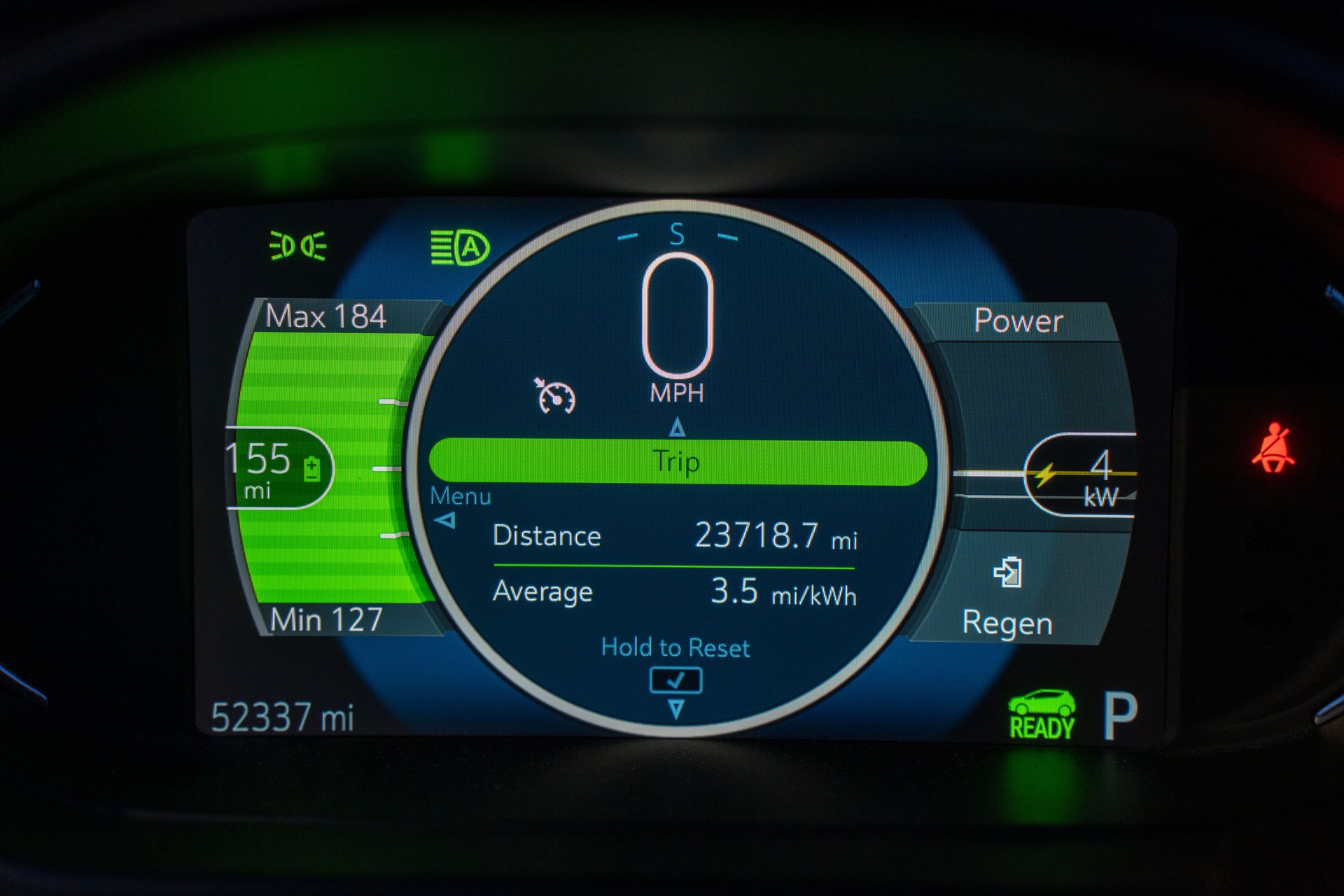
It varies significantly by manufacturer. Tesla’s battery health display in the Energy app is one of the more accurate — it’s based on measured usable capacity over recent charge cycles. Nissan’s capacity bar system (12 bars) is less granular and slower to update. Many EVs don’t show a health percentage at all. For the most accurate reading, charge to 100%, reset the trip meter, then drive until the battery is near empty and compare the odometer reading to the EPA rated range.
Will buying a used EV with 80,000 miles be a problem?
80,000 miles is typically within the battery warranty period (most cover 8 years/100,000 miles). A used EV with active thermal management and 80,000 miles will typically have 88–92% of original battery capacity — meaning 8–12% less range than new. Check the battery health before purchasing if possible, and verify the remaining warranty coverage. Avoid early Nissan Leaf models (pre-2018) in hot climates where thermal degradation may be significantly worse.