BatteryChat Editorial Team | Last Updated: March 2026
Affiliate disclosure: This article contains affiliate links. We may earn a commission if you purchase through our links, at no extra cost to you.
Quick Verdict
| Score | Best For | Skip If |
|---|---|---|
| 7.5 / 10 | Budget buyers, light outdoor use, smartphone/laptop charging, occasional camping | Powering high-draw appliances (AC capped at 200W), frequent heavy use |
Pros: Anker brand reliability and customer support; LFP battery chemistry (3,000+ cycles); competitive price for LFP; USB-C PD 60W output; compact form factor.
Cons: 200W AC output is the lowest in its class; 256Wh capacity is modest; no wireless charging pad; limited DC output options.
Specifications
| Spec | Value |
|---|---|
| Capacity | 256Wh (LFP lithium iron phosphate) |
| AC Output | 200W continuous / 400W surge (pure sine wave) |
| USB-A Output | 2x 12W |
| USB-C Output | 1x 60W (Power Delivery) |
| DC Car Port | 1x 12V/10A (120W) |
| Solar Input | Up to 65W |
| AC Recharge Time | ~1.8 hours |
| Weight | 7.7 lbs (3.5 kg) |
| Battery Chemistry | LFP — 3,000+ cycle rated lifespan |
| Warranty | 2 years (Anker) |
| Price | ~$220–$240 |
Real-World Runtime Estimates
| Device | Power Draw | Estimated Runtime |
|---|---|---|
| Smartphone charge | ~15W | ~13 full charges |
| Laptop via USB-C (45W) | ~45W | ~4 charges |
| CPAP (no humidifier, 40W) | ~40W | ~4.5–5 hours |
| LED camping lantern (5W) | ~5W | ~40 hours |
| Mini fridge (60W) | ~60W avg | ~3 hours |
| Drone battery charge (65Wh) | ~65Wh | ~3 drone batteries |
| Electric blanket (low, ~50W) | ~50W | ~3.5 hours |
The 200W AC Limitation: Does It Matter?
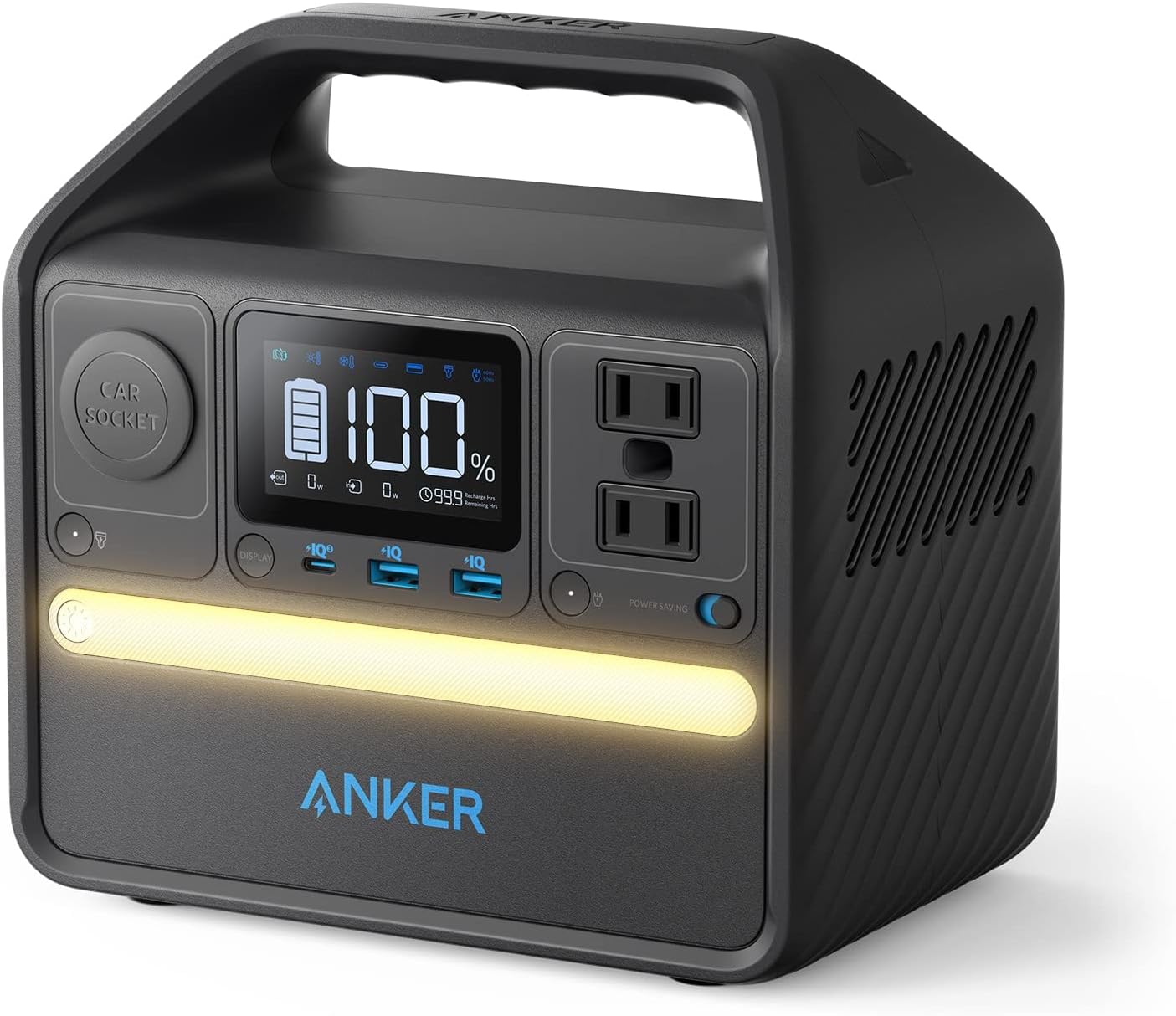
The Anker 521’s 200W AC output is the lowest in the sub-$300 portable power station category. Most competitors offer 300W or more. In practice, this means the Anker 521 cannot power:
- Most desktop computers (typically 200–400W)
- Electric kettles (1,000–1,800W)
- Hair dryers or space heaters
- Some higher-end laptops during heavy load
It can comfortably power: laptops via USB-C PD (up to 60W, more efficient than AC), phones, cameras, LED lighting, small fans, and most camping/outdoor gear. If you primarily charge devices rather than run appliances, 200W AC is sufficient.
vs. Competitors
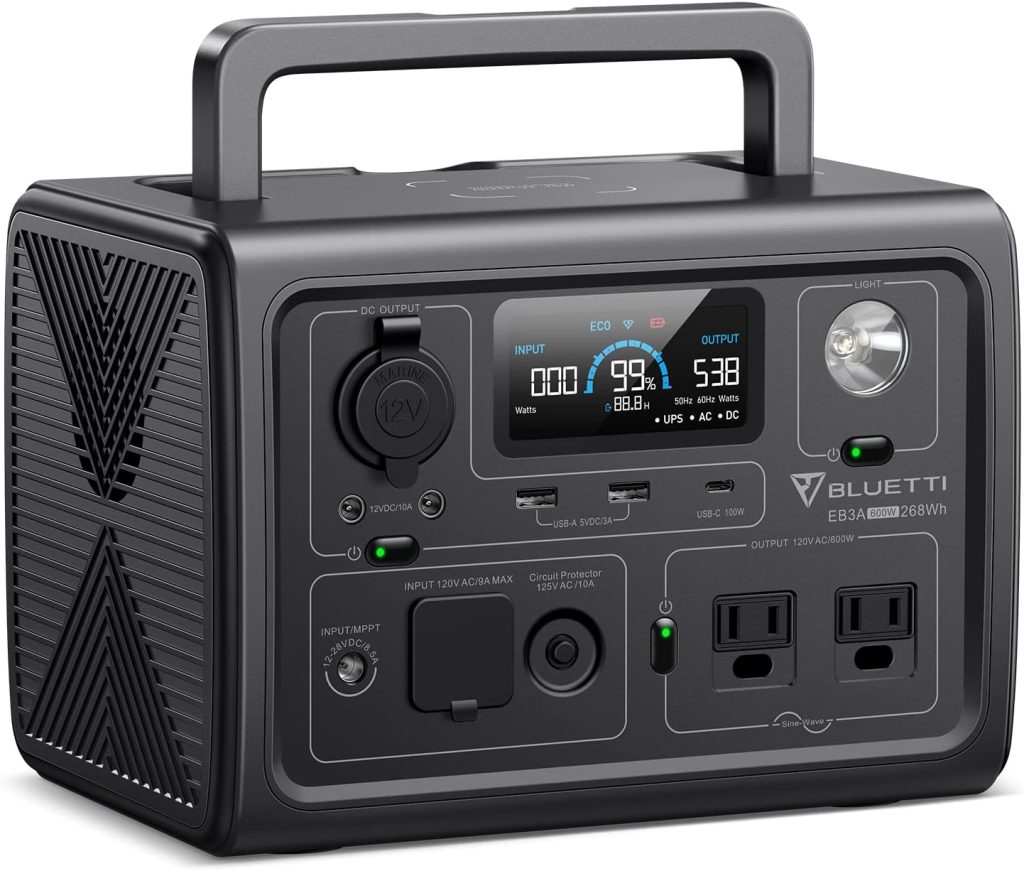
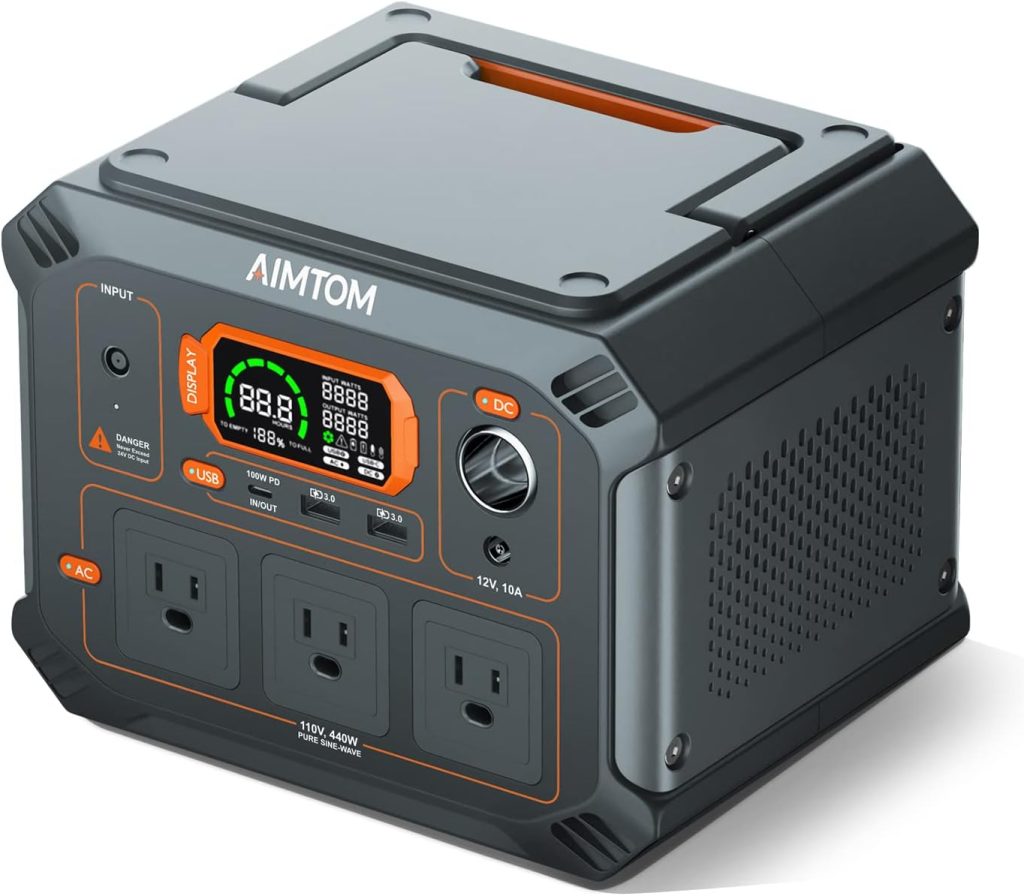
Compare the Jackery Explorer 300 Plus and the AIMTOM power station review for other compact power-station options.
| Anker 521 | Jackery 300 Plus | EcoFlow RIVER 2 | Bluetti EB3A | |
|---|---|---|---|---|
| Capacity | 256Wh | 288Wh | 256Wh | 268Wh |
| AC Output | 200W / 400W surge | 300W / 600W surge | 300W / 600W surge | 600W / 1,200W surge |
| Battery | LFP | LFP | LFP | LFP |
| USB-C PD | 60W | 30W | 60W | 100W |
| Recharge (AC) | ~1.8 hrs | ~2 hrs | ~1 hr | ~1 hr |
| Warranty | 2 years | 3 years | 5 years | 2 years |
| Price | ~$220 | ~$270 | ~$240 | ~$230 |
Who Should Buy the Anker 521
The Anker 521 is the right choice if you prioritize brand reliability, LFP longevity, and USB-C charging over raw wattage. Anker has an excellent customer service reputation — their 18-month warranty claims process is straightforward and their quality control is consistent. For buyers who primarily need to charge phones, laptops via USB-C, and run small LED lighting, the 521 delivers reliable performance at a competitive price.
Frequently Asked Questions
Can the Anker 521 power a CPAP machine?
Yes. A standard CPAP draws 30–60W; the 521’s 200W output handles it comfortably. You’ll get approximately 4–5 hours of runtime without a humidifier. For an overnight session, use the CPAP’s dedicated battery mode if available, which typically cuts draw to 20–30W and extends runtime to 6–8 hours.
Is the Anker 521 good for camping?
Yes, for device charging and lighting. For cooking (electric stoves, kettles) or running a larger mini-fridge, the 200W limit is restrictive. For car camping where you primarily need phone/laptop charging, GPS, and camp lighting, the 521 is a lightweight, reliable choice.
How long does the Anker 521 battery last?
The LFP battery is rated for 3,000+ cycles. Used weekly, that’s over 57 years — far beyond realistic usage scenarios. In practice, expect 10–15+ years before meaningful capacity loss. LFP is the longest-lasting chemistry in consumer portable power stations.