Battery overcharging is one of the most common causes of premature battery failure — and in the case of lithium batteries, a potential safety hazard. Understanding what actually happens during overcharging, which battery types are most vulnerable, and how modern protection systems work helps you make better charging decisions.
What Overcharging Does to Lithium-Ion Batteries
Lithium-ion batteries have strict maximum voltage limits per cell — typically 4.2V for NMC/NCA cells and 3.65V for LiFePO4 cells. Exceeding these limits triggers a cascade of problems:
Phase 1: Electrolyte Oxidation (Mild Overcharge)
As voltage exceeds the safe maximum, the liquid electrolyte begins to oxidize at the cathode surface. This generates heat and forms a thickening passivation layer that increases internal resistance — reducing capacity and power delivery. This phase causes permanent damage but doesn’t immediately threaten safety.
Phase 2: Lithium Plating (Continued Overcharge)
Excess lithium that cannot intercalate into the anode deposits as metallic lithium. This metallic lithium can form sharp dendrites — needle-like structures that can pierce the separator between anode and cathode, causing an internal short circuit.
Phase 3: Thermal Runaway (Severe Overcharge)
With a short circuit or continued heat generation from reactions 1 and 2, the battery reaches thermal runaway: a self-sustaining exothermic chain reaction that generates more heat than can be dissipated, rapidly increasing temperature. NMC and NCA batteries can reach temperatures of 400–900°C during thermal runaway and may vent flammable gases or catch fire. LiFePO4 batteries are significantly more resistant to thermal runaway due to the stronger iron-phosphate bond, but can still fail dangerously under extreme overcharge conditions.
What Overcharging Does to Lead-Acid Batteries
Lead-acid overcharging is less immediately dangerous but still damaging:
- Electrolyte gassing: Overcharging electrolyzes water in the electrolyte, producing hydrogen and oxygen gas. This causes water loss (requiring more frequent watering in flooded batteries), and produces a hydrogen-air mixture that can ignite if a spark is present near the battery.
- Plate corrosion: Excessive voltage accelerates oxidation of the positive plate’s lead oxide to lead dioxide, causing plate crumbling and permanent capacity loss.
- AGM and gel damage: Sealed batteries cannot vent excess gas. Overcharging causes internal pressure buildup that can crack or bulge the case. Gel batteries are particularly sensitive — even mild overcharging above 14.1V can permanently damage the gel electrolyte structure.
- Accelerated aging: Even modest chronic overcharging (1–2% above optimal charge voltage) measurably shortens battery life by years.
Do Modern Chargers Prevent Overcharging?
Yes — all quality smart chargers use multi-stage charging algorithms that stop active charging at the appropriate voltage and switch to float/maintenance mode. The stages:
- Bulk charge: High current charge to ~80% SoC
- Absorption: Constant voltage, declining current to bring to 100%
- Float: Low-voltage maintenance (13.2–13.4V for lead-acid; some systems drop to 0V and pulse intermittently for lithium)
Smart chargers (CTEK MXS, Battery Tender, Victron) are designed to stay connected indefinitely without overcharging. Cheap unregulated chargers with no automatic cutoff are genuinely dangerous for indefinite connection — they continue delivering current after the battery is full.
BMS Protection in Lithium Batteries
Every properly designed lithium battery includes a Battery Management System (BMS) that cuts off charging current if any cell reaches the maximum voltage threshold. The BMS is the primary safety protection in lithium batteries and the reason you should never use lithium cells without one.

The BMS explainer describes protection functions in more detail, and our lithium-ion safety guide covers the warning signs that require attention.
Note: a BMS cutoff is a protection mechanism, not a normal operating condition. If your charger is regularly triggering BMS cutoff due to overvoltage, you’re using the wrong charger — the BMS is compensating for it, but this stresses both the BMS and cells.
Signs a Battery Has Been Overcharged
- Lead-acid: Case swelling or bulging; excessive water consumption (flooded); electrolyte smell (sulfur); very hot case during or after charging
- Lithium: Case swelling or puffing (especially in pouch cells); elevated temperature during charging; reduced capacity after charging events
- Both types: Significantly reduced capacity compared to original; internal resistance increase visible as voltage sag under load
Can an Overcharged Battery Be Saved?
For lead-acid: mild overcharging damage may be partially reversible — a proper charge cycle and equalization may restore some capacity. Severe overcharging with physical damage (bulging, cracked plates) cannot be recovered.
For lithium: the damage from overcharging is generally not reversible. A battery that has been significantly overcharged has permanently reduced capacity and potentially compromised internal structure. If a lithium battery has been overcharged and shows physical swelling, it should be discharged, isolated, and disposed of safely — do not continue using a swollen lithium battery.
Frequently Asked Questions
Can leaving a phone plugged in overnight overcharge the battery?
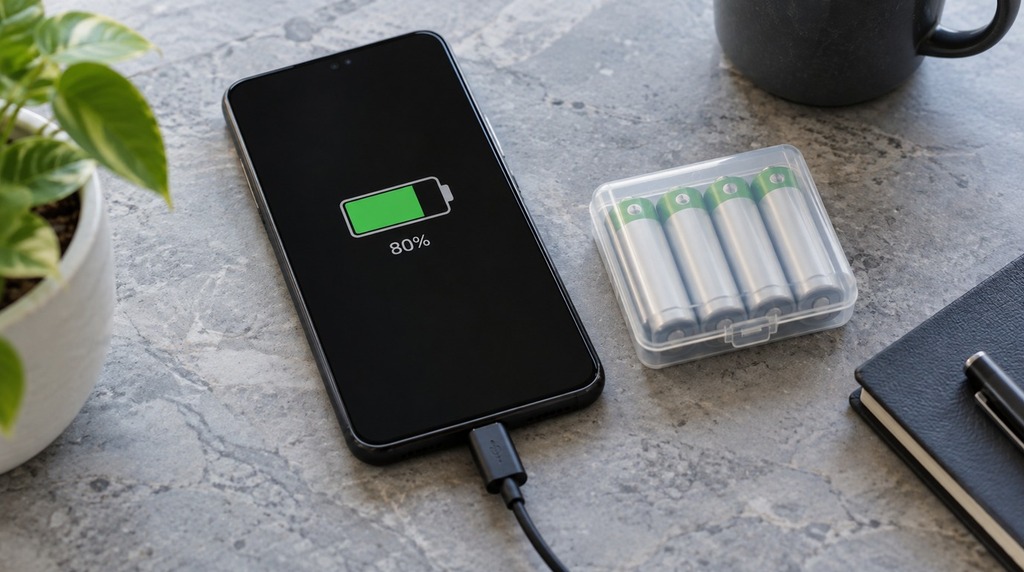
Not on any modern smartphone. All phones made in the last decade have integrated charging circuits that stop active charging when the battery reaches 100% and manage subsequent top-ups carefully. The risk is not overcharging from overnight plugging — it’s the extended time spent at 100% SoC, which modestly accelerates cathode degradation. Enabling ‘Optimized Battery Charging’ (iOS) or ‘Adaptive Charging’ (Android) mitigates even this by delaying the final charge until just before your wake time.
What should I do if I accidentally overcharge a battery?
For a lead-acid battery: let it cool completely, then check electrolyte levels and top up with distilled water if needed. Charge normally and load test — if capacity is significantly reduced, replacement may be needed. For a lithium battery that has swollen: do not charge it further, do not use it, and do not puncture it. Place it in a fireproof container (a metal bucket of sand works), move it outside, and contact your local hazardous waste facility for disposal instructions.
Does fast charging count as overcharging?
No — fast charging uses higher current, not higher voltage. Overcharging is specifically about exceeding the voltage limits. Modern fast chargers (USB-C PD, Qualcomm Quick Charge, SuperVOOC) deliver higher current while managing voltage carefully within safe limits. The concern with fast charging is the additional heat generated by high current — which does modestly accelerate degradation — but it is not overcharging in the technical sense.