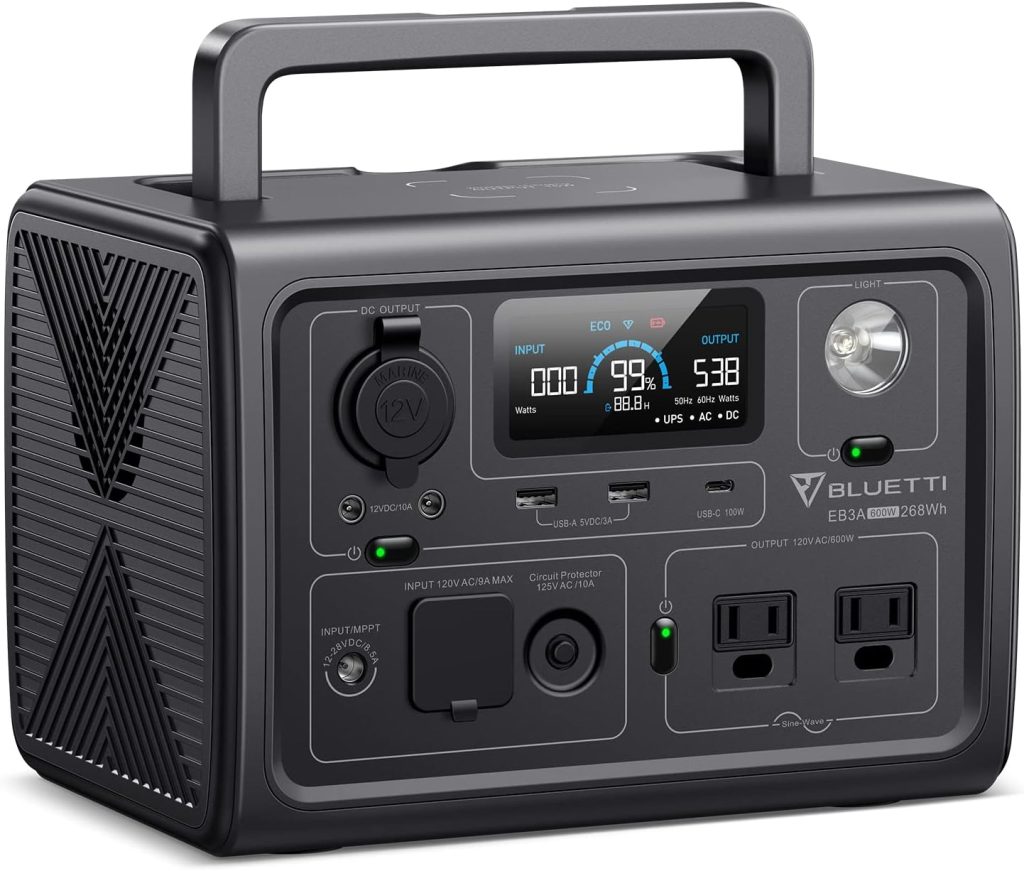
For millions of people living with obstructive sleep apnea, a Continuous Positive Airway Pressure (CPAP) machine is not a luxury—it is essential for restful sleep and cardiovascular health. But the prospect of camping off-grid, sleeping in a camper van, or weathering a multi-day storm blackout can cause intense anxiety.
How large of a portable power station do you actually need to sleep through the night with a ResMed AirSense 10/11 or Philips Respironics? In this guide, we break down real-world watt-hour draw, test the top portable power stations, and explain how to optimize battery settings for maximum nights of sleep.
CPAP Power Consumption: AC vs. DC & Humidifier Math
Your CPAP’s internal air pump motor runs natively on direct current (12V or 24V DC). When you plug it into an AC wall outlet, the bulky black brick in the power cord converts 120V AC back into DC power.
| CPAP Machine Configuration (ResMed AirSense 11) | Average Power Draw | Watt-Hours Per 8-Hour Night | Nights on a 500Wh Battery |
|---|---|---|---|
| DC Cord (Humidifier OFF, Heated Tube OFF) | 8–12 Watts | 65–95 Wh | 4 to 6 Nights |
| AC Inverter (Humidifier OFF, Heated Tube OFF) | 18–25 Watts | 140–200 Wh | 2 to 3 Nights |
| DC Cord (Humidifier ON Level 3, Tube OFF) | 25–35 Watts | 200–280 Wh | 1.5 to 2 Nights |
| AC Inverter (Humidifier ON Level 5, Heated Tube ON) | 60–80 Watts | 480–640 Wh | Less than 1 Night! |
Top CPAP Portable Power Stations for 2026
1. Best Overall for Weekend Camping: EcoFlow River 2 Pro (768Wh)
With 768 Watt-hours of LiFePO4 battery capacity and a high-efficiency 12V 10A regulated cigarette lighter port, the River 2 Pro powers a ResMed AirSense 11 on DC for 6 to 8 full nights without heat. It recharges from 0% to 100% in just 70 minutes via AC, making it effortless to top off at a coffee shop or campground bathhouse during road trips.
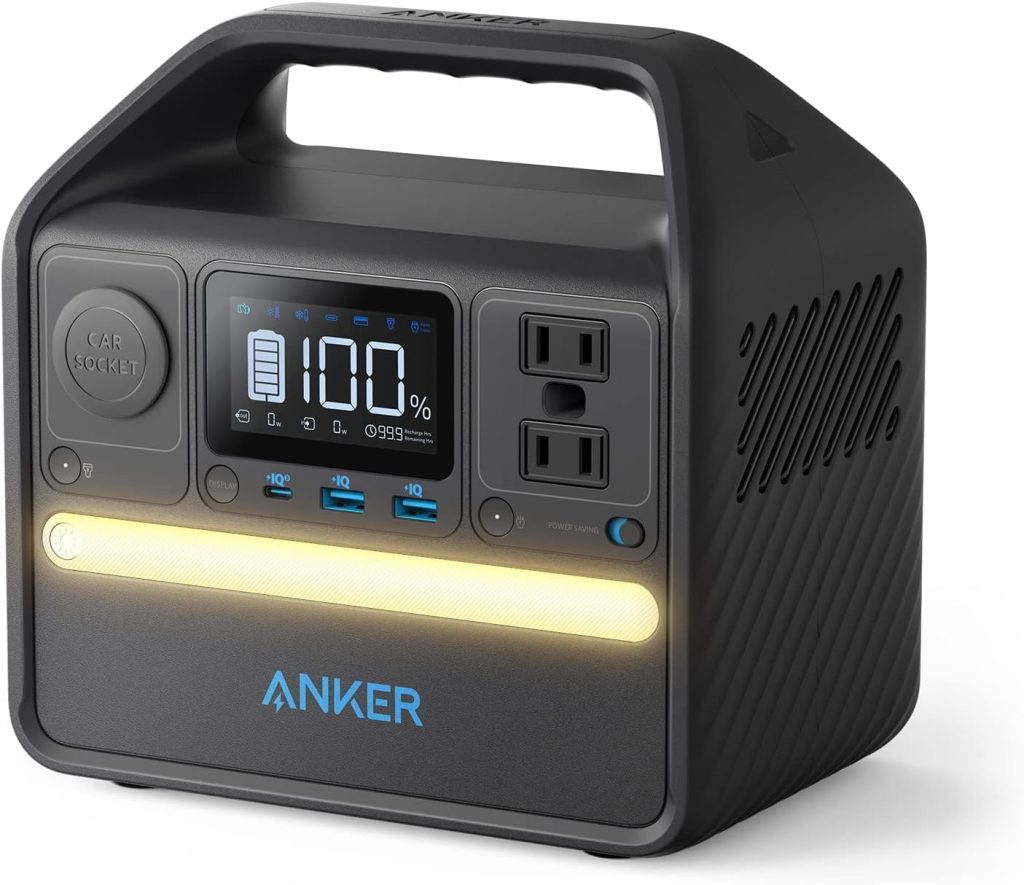
2. Best Ultra-Lightweight for Air Travel: Anker 521 PowerHouse (256Wh)
Weighing only 8.2 pounds, the Anker 521 uses durable LiFePO4 cells and easily powers a CPAP (heat off, DC cord) for 2 to 3 full 8-hour nights. Its compact footprint fits into a backpack or small carry-on bag for weekend cabin getaways.
3. Best for Long-Term Off-Grid / Van Life: EcoFlow Delta 2 (1,024Wh)
If you refuse to sleep without full heated humidification, you need at least 1,000 Watt-hours of capacity. The Delta 2 delivers 1,024Wh, providing 2 full nights of heated humidity or up to 10 nights of unheated therapy, backed by 500W fast solar recharging.
Frequently Asked Questions
Can you bring a CPAP portable power station on a commercial airplane?
FAA and TSA regulations allow lithium-ion batteries up to 100 Watt-hours (Wh) in carry-on baggage with no restrictions, and batteries between 101Wh and 160Wh with airline approval. Power stations exceeding 160Wh (such as the Anker 521 at 256Wh or EcoFlow River 2 at 256Wh) are prohibited on commercial passenger planes. For air travel, purchase FAA-approved medical travel battery packs (like the Medistrom Pilot-24 Lite at 98Wh).
Why did my power station shut off in the middle of the night?
Many power stations have an ‘Auto-Sleep / Energy Saving’ feature. When your CPAP machine enters sleep mode or draws very low wattage (under 10W), the power station assumes no device is connected and powers off after 15 to 30 minutes. Always disable the ‘Auto-Timeout’ or ‘Eco Mode’ in the power station’s companion mobile app before going to sleep.
Do I need to buy the official ResMed 12V DC converter cable?
Yes. ResMed AirSense 10 and 11 machines operate on 24V DC with proprietary center-pin smart communication chips. If you use a cheap generic 12V cigarette cable without the proper 12V-to-24V step-up converter, the machine will display an error and refuse to blow air.