A car battery is one of those components you don’t think about until it fails — usually at the worst possible moment. Understanding how long they realistically last, what shortens their life, and when to replace preemptively can save you from an unexpected roadside failure.
Average Car Battery Lifespan
Industry data and owner reports consistently show:
- Average lifespan: 3–5 years for most passenger vehicles
- Hot climates (Arizona, Texas, Florida, Southern California): 2–4 years — heat is the primary battery killer
- Moderate climates (Pacific Northwest, Midwest, Northeast): 4–6 years
- Cold climates only: Cold is less damaging to battery lifespan than heat, though it stresses batteries harder during starting — see below
- Premium batteries (Odyssey, Optima) with ideal conditions: 5–8 years possible
What Kills Car Batteries Early
1. Heat (Biggest Factor)
Battery chemistry accelerates at high temperatures. The rule of thumb: every 15°F (8°C) above 77°F (25°C) halves the battery’s service life. An Arizona summer regularly sees underhood temperatures of 140–180°F — far above the design operating range. This is why battery failure rates are highest in hot states, despite the common perception that cold weather kills batteries.
2. Short Trips Without Full Recharge
Every time you start your car, you use a burst of energy from the battery that needs to be replenished by the alternator. On short trips (under 5–10 minutes), the alternator doesn’t have enough time to fully recharge what was used for starting. Over time, the battery slowly discharges cycle by cycle, spending extended time in a partially discharged state — which promotes sulfation and shortens life.
This is particularly damaging for city drivers who make multiple short trips. Weekend warriors (long highway drives) are gentler on batteries because the alternator gets sufficient run time.
3. Parasitic Drain
Modern vehicles have numerous electrical systems that draw current even when the vehicle is off: alarm systems, remote start, key fob detection, GPS, adaptive headlights, infotainment memory. Normal parasitic drain is 25–50 milliamps — harmless. Faulty modules, aftermarket electronics, or a failing relay can cause excessive drain (100mA+) that slowly discharges the battery over days or weeks, leading to a dead battery and potential sulfation damage.
4. Age-Related Capacity Loss
All batteries degrade over time regardless of use. The lead plates shed active material with each charge cycle, permanently reducing capacity. After 4–5 years, most batteries have lost 20–40% of their original capacity — meaning they may start the car reliably until one particularly cold morning or one extra-long storage period pushes them over the edge.
5. Infrequent Use and Long Storage
A car battery left unused for weeks or months will self-discharge (2–5% per month for lead-acid). Once discharged below a critical threshold, sulfation begins and may be irreversible. Vehicles stored seasonally (summer cars, classic cars, motorcycles) need a battery maintainer to prevent this.
Signs Your Car Battery Is Dying
- Slow cranking: Engine turns over sluggishly on starting — especially noticeable in cold weather
- Dimming lights when starting: Lights dim noticeably when the ignition engages
- Battery warning light: If the charging system warning light illuminates, have both the battery and alternator tested
- Swollen battery case: Physical swelling indicates overcharging or excessive heat — replace immediately
- Corrosion on terminals: Heavy white/blue-green buildup around terminals can indicate a failing battery or overcharging
- Frequent jump starts: If you’ve needed multiple jump starts in a short period, the battery is at end of life
- Age: Simply being over 4 years old in a hot climate, or over 5 years in a moderate climate, is sufficient reason for a proactive test
How to Test Your Car Battery’s Remaining Life
Free load test at auto parts stores: AutoZone, O’Reilly Auto Parts, Advance Auto Parts, and Pep Boys offer free battery testing. The load test draws simulated starting current while measuring voltage drop — far more accurate than a simple voltage measurement for determining whether a battery can reliably start your vehicle.
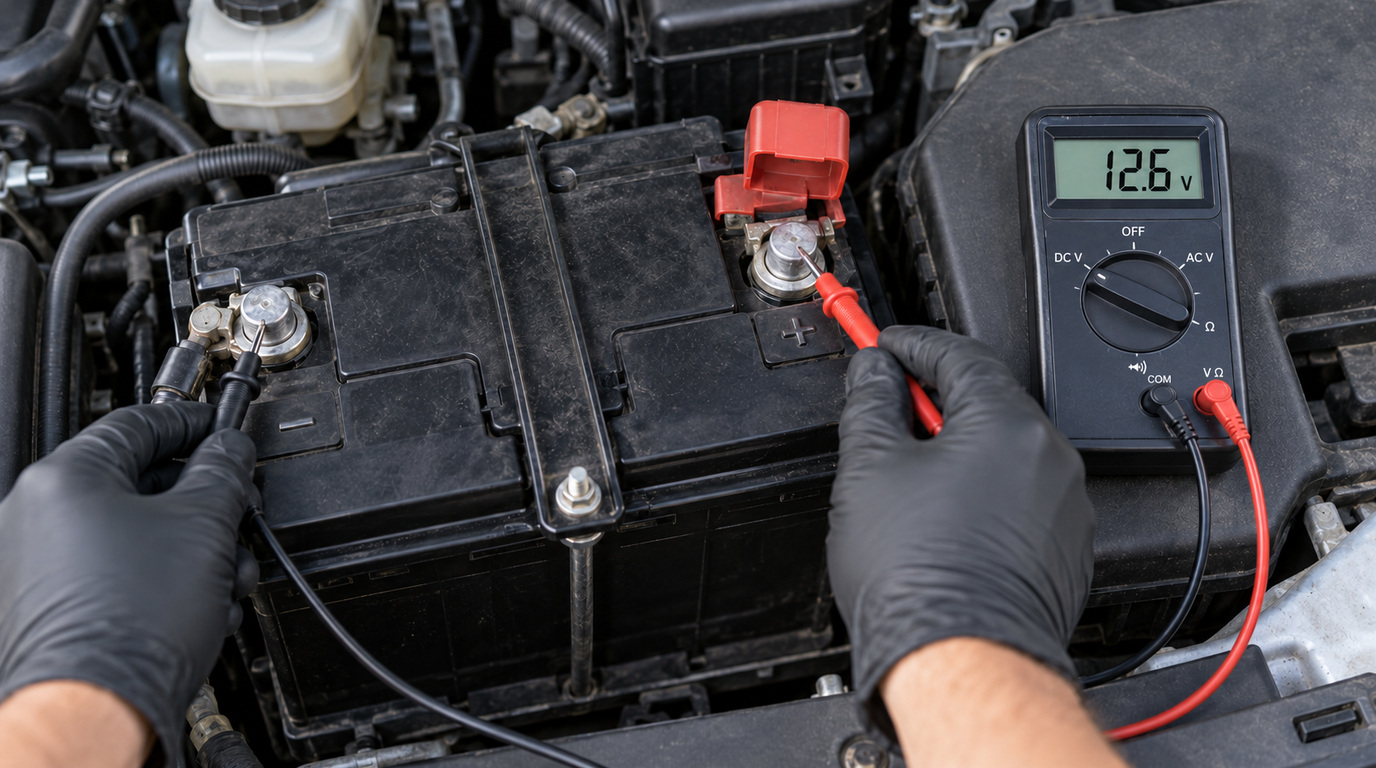
Use the steps in how to tell whether a battery is dead for basic checks, and compare cold-climate car batteries if replacement and winter starting are your main concerns.
Home multimeter test: Resting voltage after 2+ hours without use: 12.6–12.8V = full. 12.4V = 75%. 12.0V = 25%. But voltage alone doesn’t tell you about capacity or cranking ability — load testing is more meaningful.
When to test: Annually once the battery is 3 years old. Immediately if you notice any of the warning signs above.
When to Proactively Replace
The cost of a battery failure (tow truck, potential lockout, missed appointments) typically exceeds the cost of a preemptive replacement. Consider replacing:
- At 4 years in hot climates (Southwest US, Southern states)
- At 5 years in moderate climates
- At any age if a load test shows less than 75% of rated CCA
- Before a long road trip in a car with a 4+ year old battery
- Before winter if the battery is 3+ years old and has never been tested
Frequently Asked Questions
Does a new car battery need to be charged?
A new battery from a reputable retailer with good stock turnover should be at or near full charge. However, if the battery has been sitting on the shelf for months, it may be at 70–80% charge. Most modern smart chargers can top it off in an hour. The alternator will complete the charge on your first extended drive. You don’t need to do anything special — just install it and drive normally.
Can a completely dead car battery be recharged?
Often yes, if it simply discharged from disuse or a dome light left on. Connect a smart battery charger for 8–24 hours. If the battery doesn’t accept a charge or won’t hold it, it may be sulfated (discharged too long) or have a failed cell — both of which may prevent recovery. A load test after charging reveals whether the battery is actually healthy or just temporarily holding a surface charge.
Should I disconnect my car battery for long-term storage?
Yes — if storing for more than 30 days, disconnect the negative terminal to stop parasitic drain. Better yet, connect a battery maintainer (Battery Tender, CTEK MXS 5.0 or Victron Blue Smart) to keep the battery at full charge without overcharging. For storage over 6 months, bring the battery indoors if possible — extreme cold is less damaging than extreme heat, but moderate temperatures extend battery life. Check and recharge monthly if storing without a maintainer.