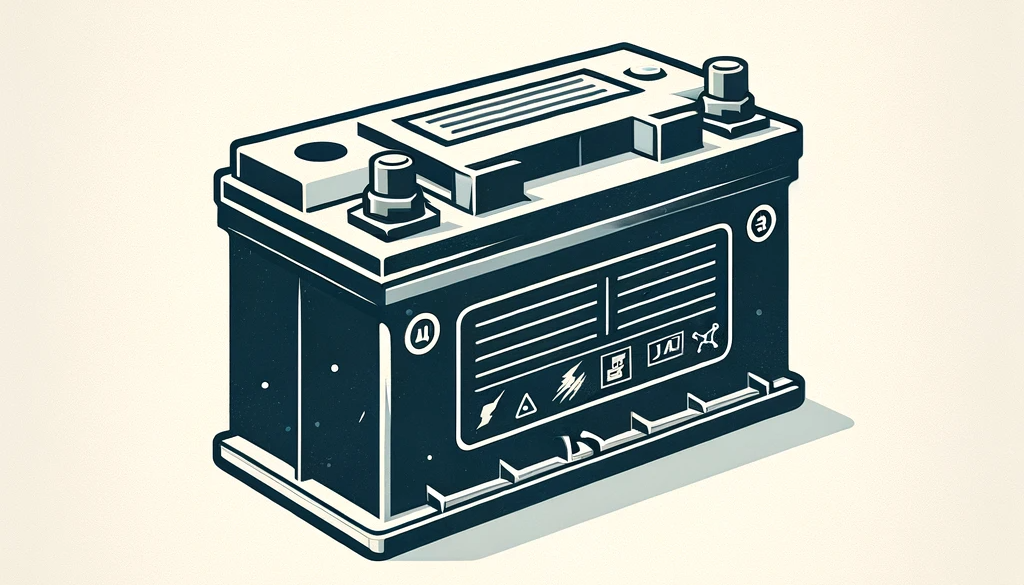
You charge your car battery to 100% or even install a brand-new $200 battery, yet after parking for two days over the weekend, the car clicks dead on Monday morning. Your alternator charges fine, and the battery holds voltage on the bench. You are dealing with a parasitic electrical drain.
In this guide, we walk through the modern, professional method to find parasitic battery draws using a digital multimeter—including the advanced fuse millivolt drop test that prevents waking computer modules.
Common Causes of Parasitic Battery Drains
- Hidden Interior Lights: Glove box, center console, trunk, or under-hood courtesy lights remaining on due to a broken plastic door switch plunger.
- Aftermarket Accessories: Hardwired dash cameras, remote start modules, radar detectors, or GPS trackers wired to constant 12V battery power instead of switched accessory power.
- Stuck Electrical Relays: A failing A/C compressor clutch relay or fuel pump relay that remains mechanically stuck closed after the ignition is turned off.
- Faulty Body Control Modules (BCM): Electronic control units that fail to enter deep “sleep mode” because of a CAN-bus communication error.
- Alternator Diode Leakage: A shorted internal alternator rectifier diode that leaks current backwards from the battery to ground through the alternator casing.
The Preparation Checklist (Mandatory)
Modern vehicles have dozens of networked computers that remain awake for 20 to 45 minutes after the key is removed. If you do not prepare the car properly, you will measure normal computer boot activity and misdiagnose a phantom drain.
- Park the car in a well-ventilated garage or flat driveway. Ensure the battery is fully charged (at least 12.6V).
- Pop the hood, roll down the driver’s window (so you don’t lock yourself out), and set the parking brake.
- Latching the Door Latches: Use a screwdriver shank to physically trip the latch mechanism on the open driver’s door and hood latch to the closed position. This tricks the vehicle’s computer into believing all doors and the hood are securely closed.
- Remove the smart key fob and store it at least 25 feet away from the vehicle so the proximity sensor does not wake the vehicle’s wireless antennas.
- Wait 30 to 45 Minutes: Let the car sit completely undisturbed until all ECUs and BCM modules enter deep sleep.
Method 1: The Modern Fuse Millivolt Drop Test (No Disconnection)
Old-school mechanics used to pull fuses one by one while watching an inline ammeter. On modern vehicles, pulling a fuse breaks the circuit and wakes the entire CAN-bus network, resetting the 45-minute sleep timer. The professional technique is the Millivolt (mV) Drop Test across the top test points of standard blade fuses.
How It Works:
Every fuse has a tiny internal resistance across its metal element. If electrical current is flowing through that fuse to a parasitic draw, Ohm’s Law dictates that a microscopic voltage drop will occur across the fuse terminals.
Step-by-Step Execution:
- Set your digital multimeter to the most sensitive DC Millivolts (mV) scale (typically 200mV or 400mV DC).
- Place the sharp multimeter probe tips firmly onto the two exposed metal test pads on the top of each blade fuse.
- Read the Display:
- If the circuit is inactive, the multimeter will read 0.0 mV.
- If current is flowing, the multimeter will display a positive number (e.g., 0.8 mV to 3.5 mV).
- Refer to a standard Fuse Voltage Drop Chart (Mini / ATO / Maxi) to convert the millivolt reading directly into milliamps (mA). For example, a reading of 1.4 mV across a standard 10A mini fuse indicates approximately 190 mA of current draw!
- Consult your vehicle owner’s manual fuse diagram to identify which circuit corresponds to that specific fuse (e.g., Fuse 14 = Radio / Telematics). Unplug components on that circuit until the millivolt drop collapses to 0.0 mV.
Method 2: The Inline Ammeter Series Test
If you prefer measuring total current draw directly from the battery post:
- Disconnect the negative (-) battery terminal clamp from the battery post.
- Connect the red multimeter lead to the disconnected cable clamp, and the black lead to the negative battery post. Current now flows through the multimeter.
- Verify total draw is below 0.050A (50 mA). If it reads 0.250A or higher, a severe drain is active.
Frequently Asked Questions
How long can a car sit before the battery dies normally?
With a healthy battery and normal parasitic draw (30 mA), a vehicle can sit parked for 3 to 4 weeks and still start reliably. In cold winter weather or with an older battery, 2 weeks of idle parking may be enough to drop cranking voltage.
Can a bad alternator cause a parasitic draw while the engine is off?
Yes. Inside the alternator is a bridge rectifier composed of 6 to 8 semiconductor diodes that convert AC power to DC power. If one diode shorts out, it creates a direct electrical pathway for current to flow from the battery positive terminal through the stator windings to ground, creating a steady 200 mA to 500 mA parasitic drain.
Why did my multimeter fuse blow when testing parasitic draw?
If you opened a car door with interior dome lights on, turned on the ignition switch, or if an electric cooling fan cycled on while the multimeter was wired in series on the 10A current port, current exceeded 10 Amps and blew the meter’s internal ceramic fuse. Always verify accessories are off before connecting an ammeter.
Do aftermarket dash cams cause parasitic battery drain?
Yes, especially if installed using a generic three-wire hardwire kit with parking surveillance mode enabled. Cheap hardwire kits feature low-voltage cutoffs set too low (e.g., 11.6V). By the time the dash cam shuts off, the battery is deeply discharged. Quality hardwire kits allow setting cutoff thresholds at 12.2V or 12.4V.